

Caricature and humor are for life and converge with art
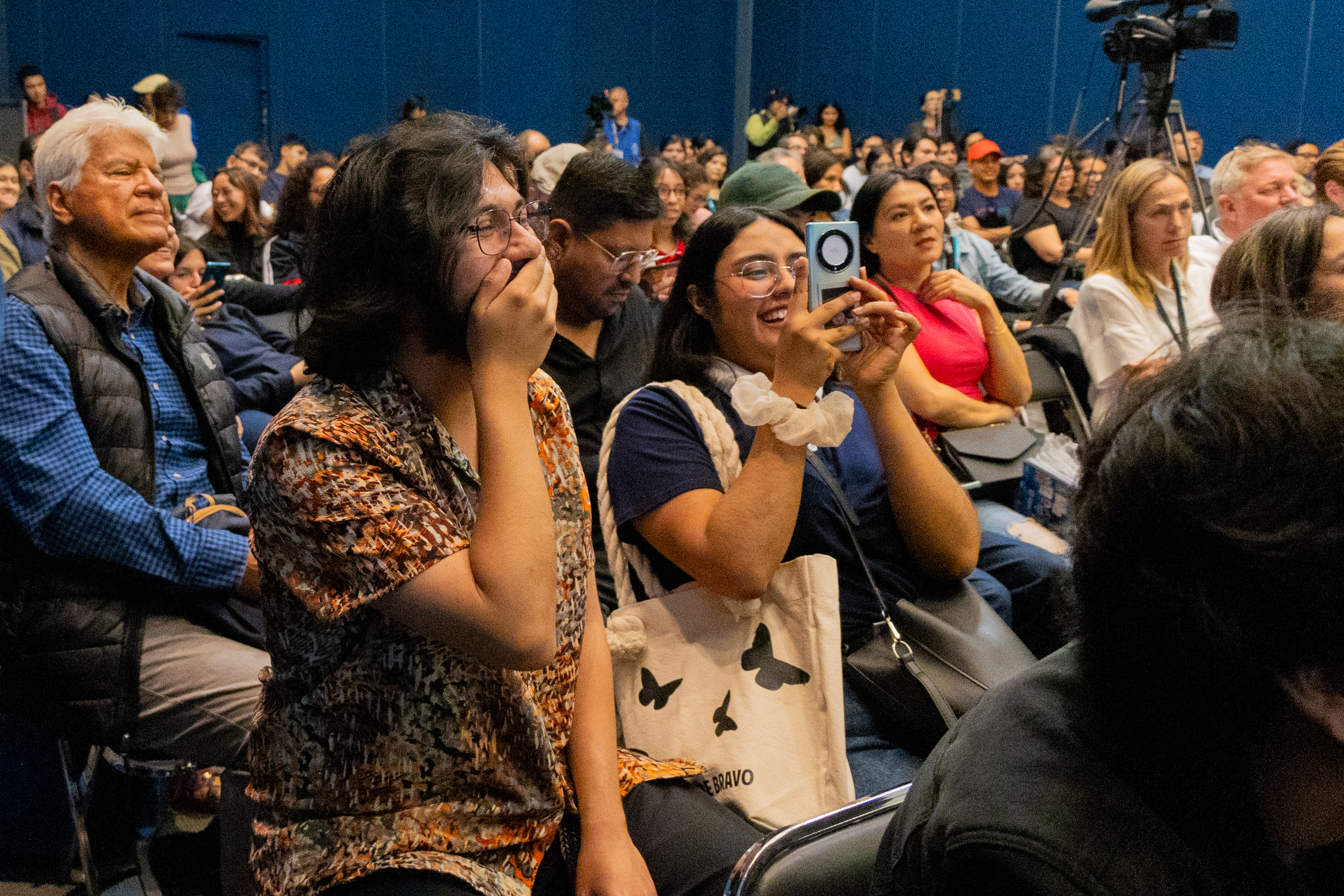
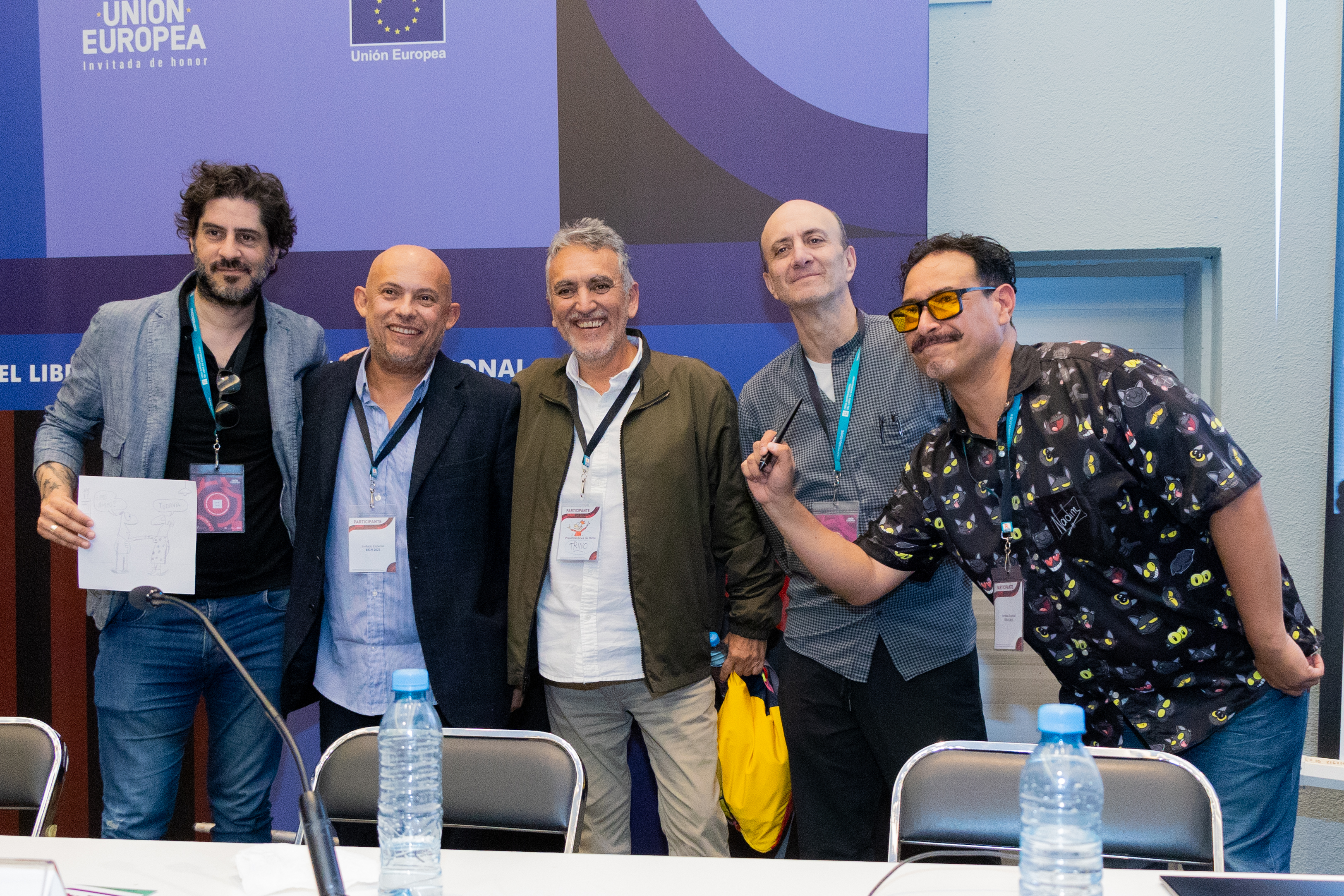
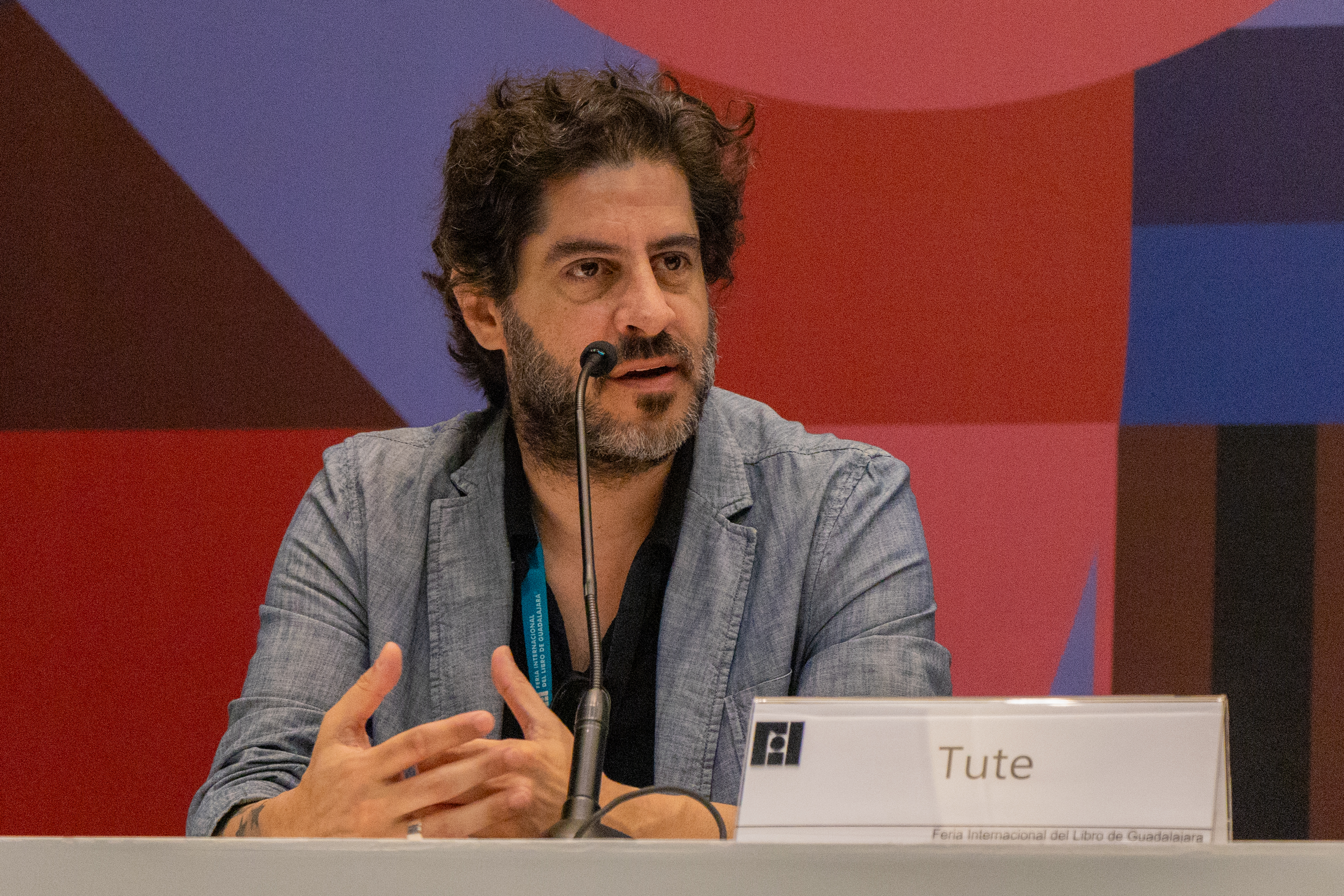
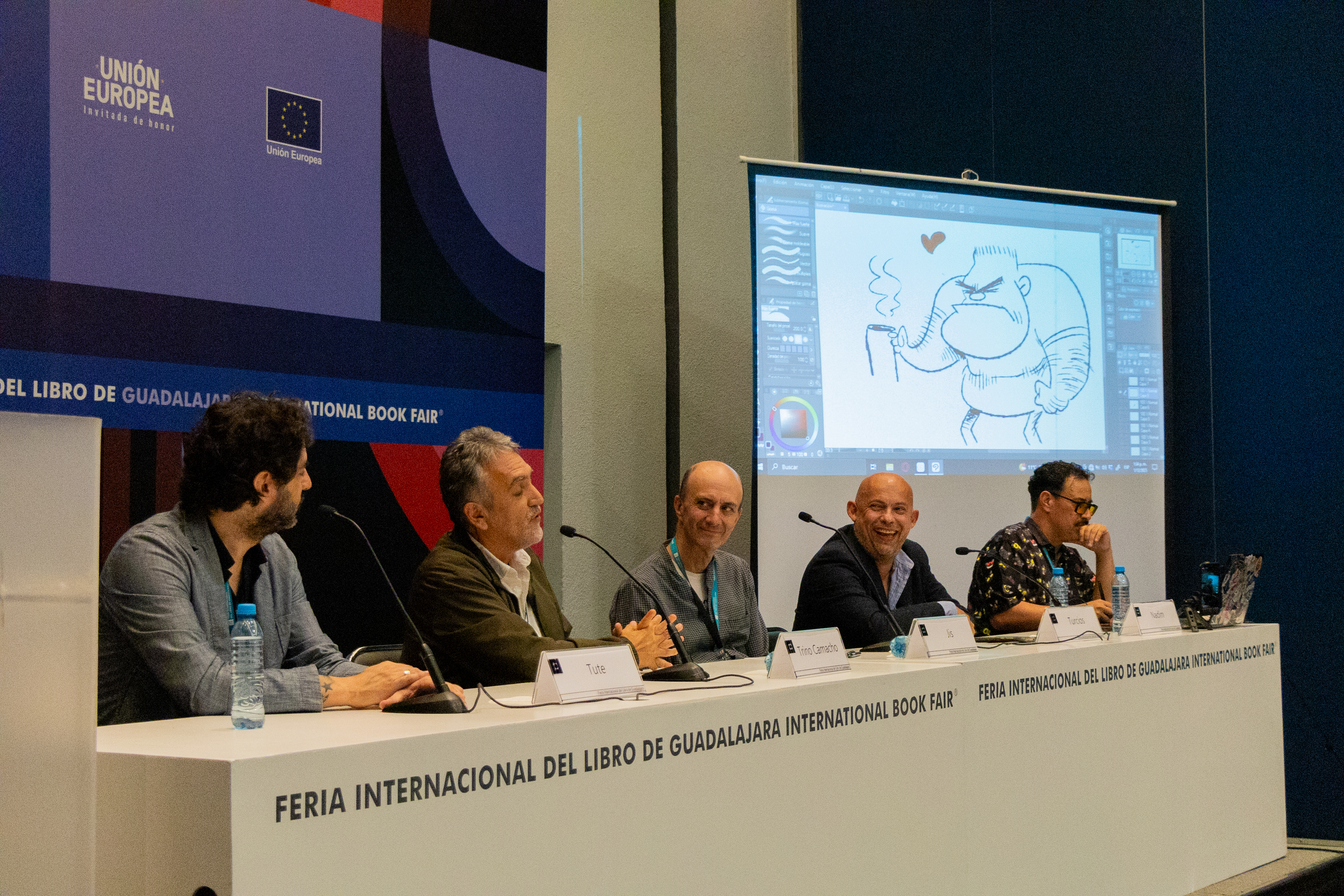
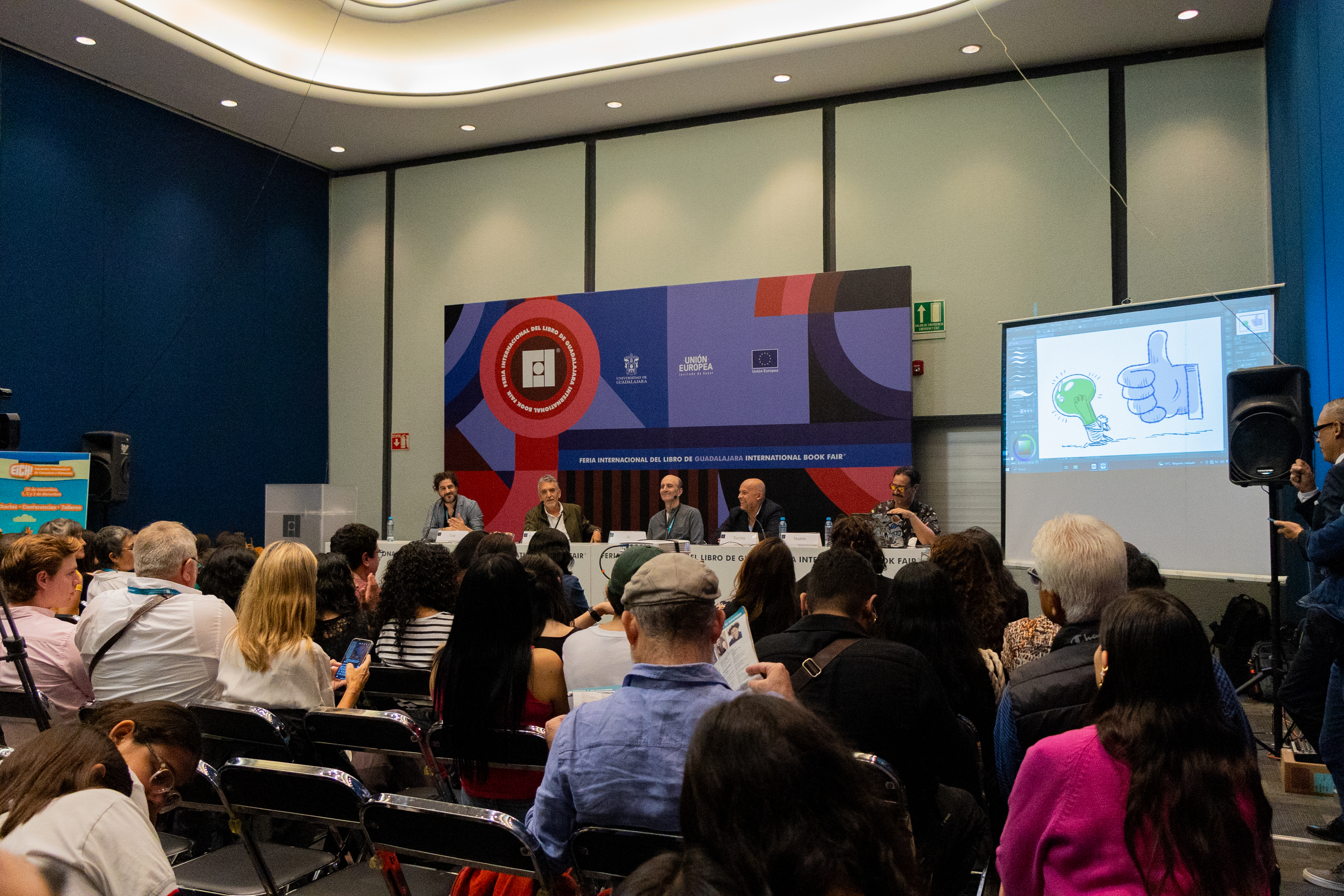
Jis, Trino Camacho, Turcios and Tute filled Hall 2 of the Guadalajara International Book Fair with laughter and drawings, as part of the activities of the International Meeting of Caricature and Comics, and evoked masters such as Quino and Sergio Aragonés.
Tute recalled an anecdote from a meeting with Quino, in which he dared to show him his drawings at the age of 17: “I gave him the folder and very trembling, I said: ‘maestro, I wanted to show you my first drawings’ (…) He started turning the pages, I looked to see if he was laughing and the guy didn’t, he turned the pages and I knew that on the tenth page was my strongest joke (…) He told me: ‘you have to put your finger more in the wound’; for me it was lethal, you think you are a genius about to be discovered.”
Turcios brought up Quino by recalling that graphic humor can be universal without words, and that's what Quino taught: "One begins to educate oneself to be graphically mute," he said.
Trino, who moderated the discussion on various topics, brought up the role of women in graphic humor, agreeing with Jis that their presence is more visible in stand-up comedy. In response, Tute said, "Sexist attitudes don't want a funny woman; they want a woman who applauds men's jokes, because humor is ultimately intelligence, and they haven't allowed women to occupy those spaces."
While this was happening, Nadim picked up his pencil and drew the words and ideas that were being spoken. Trino mentioned that cartoonists, humorists, and comic strip artists are often asked to draw pictures. And that he used to draw Snoopys for pretty girls to win them over; instantly the audience saw one on the screen. “Now let’s talk about difficult things, like horses and bicycles, so he can draw them,” Tute joked.
When asked if one ever stops being a comedian, Turcios reflected that caricature is for life: “You’re born attached to what you do, to your craft (…) If I were to stop being a comedian, it would be the day I stopped thinking. I never stop thinking; I want to draw and write all my life,” he said, sharing that he will soon have a publication featuring his work and poetry.
Tute added that graphic humor can be versatile and allows him to do other activities: “I’m still the restless kid, I have a lot of things to do outside of graphic humor; art is generous and you can explore it within whatever spectrum you can, I like to make songs, film, paint,” he shared.
The audience had the opportunity to participate. One of the questions focused on artificial intelligence, to which Jis jokingly replied that he was indeed willing to let it do his work: “I am hopeful that the machine will be able to make my monkeys and I can dedicate myself to contemplation,” he joked.
Tute, this year's La Catrina award winner, shared another anecdote: his daughter asked an artificial intelligence to tell a joke in his style. The response was a dialogue between Mabel and Rubén, but "the joke was terrible. I don't know if it was a critique of my work or if it really doesn't know how to do humor yet," he explained.
Regarding restrictions when publishing, Trucios said that they do have to adapt to the editorial guidelines of the companies they work with, but that on the other hand there is more freedom on social media.
The Cartoon and Comic Book Encounter will continue with more activities this Saturday with panels, book presentations and the La Catrina tribute to Tute at 1:00 p.m., in the Juan Rulfo hall of Expo Guadalajara.
Attentively
"Piensa y Trabaja"
“2023, Year of promoting comprehensive education with a Network of Multi-thematic Centers and Systems”
Guadalajara, Jalisco, December 1, 2023
Text: Andrea Martínez Parrilla | CUAAD
Photography: Angélica Grajeda
- 196 views